
Conditions We Treat
Comprehensive Neurological Care
Here you will find an overview of the neurological conditions we treat.
Stroke and Cerebrovascular Disorders
We provide care for patients with ischemic stroke, intracerebral hemorrhage, transient ischemic attack (TIA, a temporary disruption of blood flow to the brain), and other cerebrovascular disorders, including narrowing of the arteries supplying the brain. Our focus is on comprehensive evaluation of the underlying causes and risk factors, as well as treatment, follow-up care, and prevention of recurrent stroke.
For diagnosis and follow-up, we use modern neurovascular ultrasound techniques to assess the arteries supplying the brain. In addition, digital fundus photography allows us to examine the blood vessels at the back of the eye.
Dizziness and Balance Disorders
We provide care for patients with dizziness and balance disorders, including benign positional vertigo, vestibular disorders, vestibular migraine, and neurological balance disorders. Dizziness may also be caused by impaired blood flow, orthostatic symptoms, or disorders of the autonomic nervous system and cardiovascular regulation.
Through a careful neurological examination and targeted diagnostic testing, we determine the cause of your symptoms. Depending on your symptoms, tests of nerve function, the arteries supplying the brain, or autonomic cardiovascular regulation may be appropriate. We then discuss the most suitable treatment options with you.
Headache and Migraine
We provide care for patients with migraine, tension-type headache, cluster headache, and other primary and secondary headache disorders. A thorough neurological assessment helps determine the type of headache and identify possible underlying causes.
Depending on your symptoms, additional examinations of the arteries supplying the brain, the back of the eye and the optic nerve, or the cerebrospinal fluid may be appropriate. If idiopathic intracranial hypertension (IIH) is suspected, we offer specialized diagnostic assessment and treatment.
Increased Intracranial Pressure and Cerebrospinal Fluid Disorders
We provide care for patients with disorders of intracranial pressure and cerebrospinal fluid circulation, particularly idiopathic intracranial hypertension (IIH) and normal pressure hydrocephalus (NPH). These conditions can cause symptoms such as headaches, visual disturbances, walking difficulties, or memory problems.
For further evaluation, we perform lumbar punctures with measurement of cerebrospinal fluid pressure and cerebrospinal fluid analysis, as well as examinations of the back of the eye and the optic nerve. In patients with IIH, a lumbar puncture may also be performed to relieve increased pressure. In patients with NPH, a diagnostic removal of cerebrospinal fluid (tap test) can help determine whether symptoms improve when the amount of cerebrospinal fluid is reduced.
Nerve and Muscle Disorders
We diagnose and provide care for patients with polyneuropathies, nerve entrapment syndromes (such as carpal tunnel syndrome), nerve root disorders (radiculopathies), individual nerve damage and nerve injuries, as well as muscle and neuromuscular disorders. These conditions may cause symptoms such as numbness, tingling, pain, or muscle weakness.
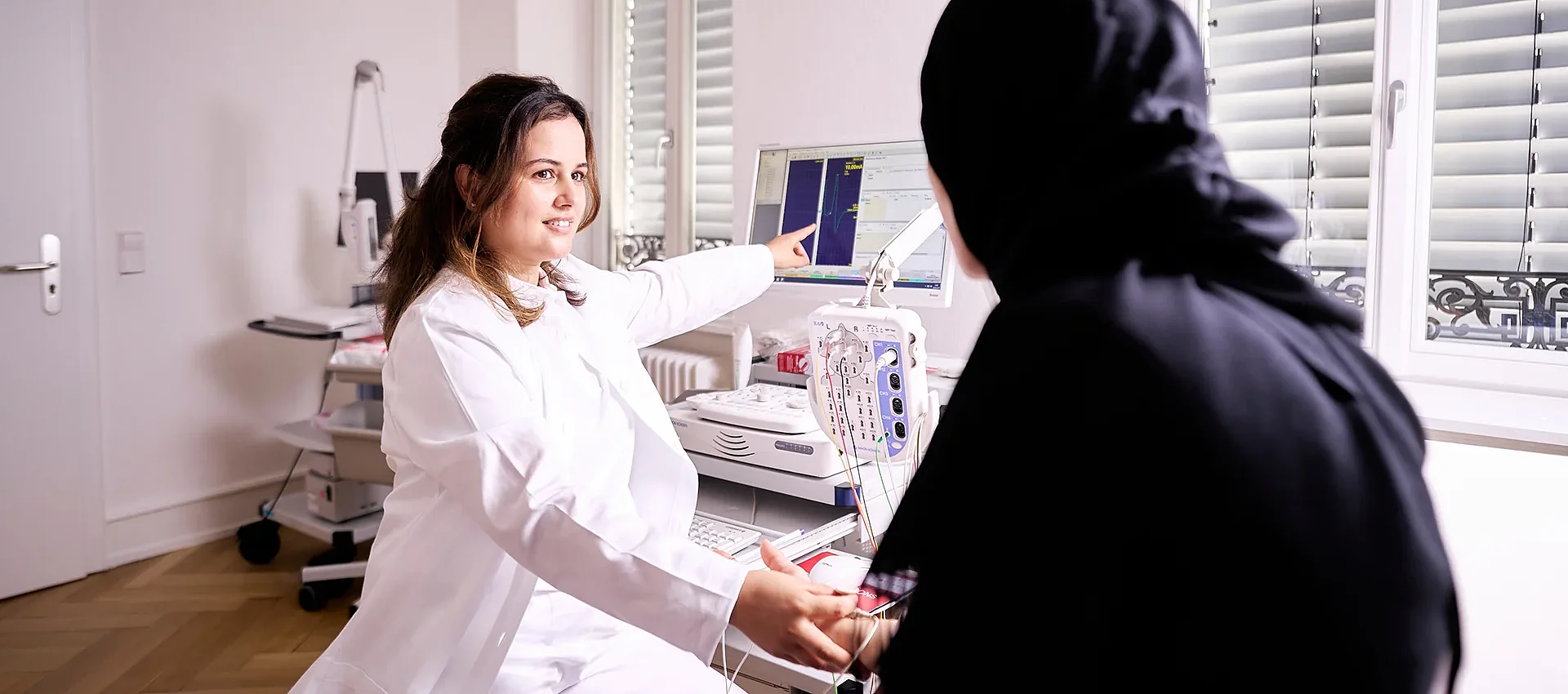
Through a careful neurological examination, we determine the cause of your symptoms. Depending on the findings, we may perform tests of nerve and muscle function as well as nerve and muscle ultrasound.
Neurodegenerative Disorders
We provide care for patients with Parkinson’s disease, atypical parkinsonian syndromes, dementia (such as Alzheimer’s disease), and motor neuron diseases such as amyotrophic lateral sclerosis (ALS). Our focus is on early diagnosis and long-term care.
For further evaluation, we use memory tests, electrophysiological tests of nerve and muscle function, nerve and muscle ultrasound, cerebrospinal fluid analysis, and laboratory tests.
Epilepsy and Seizure Disorders
We provide care for patients with epilepsy, epileptic seizures, as well as unexplained episodes of altered or lost consciousness. A thorough neurological assessment helps identify the cause of these symptoms and distinguish epileptic seizures from other causes.
For diagnosis, we primarily use EEG examinations. We provide comprehensive advice on medical treatment and on specific aspects of everyday life, including family planning and pregnancy, fitness to drive, and work-related considerations.
Fainting (Syncope) and Unexplained Loss of Consciousness
We provide care for patients with syncope (fainting), recurrent circulatory symptoms, orthostatic symptoms, and disorders of the autonomic nervous system (autonomic dysfunction). These include, for example, postural orthostatic tachycardia syndrome (POTS) and autonomic dysfunction associated with polyneuropathy or diabetes mellitus. Autonomic symptoms may also occur in association with ME/CFS.
A thorough neurological assessment helps determine whether symptoms are caused by disorders of cardiovascular regulation, impaired blood flow to the brain, epileptic seizures, or other neurological conditions.
Depending on the symptoms and findings, we may perform tilt table testing with continuous monitoring as well as autonomic function tests, including heart rate variability (HRV) and sympathetic skin response (SSR). Neurovascular ultrasound or EEG examinations may also be appropriate. These tests help distinguish between different causes of fainting, circulatory symptoms, and unexplained loss of consciousness.
Neuroimmunological Disorders
We provide care for patients with multiple sclerosis (MS), neuromyelitis optica spectrum disorder (NMOSD), MOG antibody-associated disease (MOGAD), and other inflammatory disorders of the nervous system. Our focus is on comprehensive initial assessment and early diagnosis, long-term care, and monitoring of disease progression and treatment response.
For further evaluation of neuroimmunological disorders, we use electrophysiological testing, cerebrospinal fluid analysis, and laboratory tests.
- Learn more about our electrophysiological diagnostics
- Learn more about our lumbar puncture and cerebrospinal fluid analysis
Second Opinion for Carotid Stenosis
The decision for or against a planned procedure for carotid stenosis (narrowing of the carotid artery) should be based on a careful and independent assessment. As part of the statutory second opinion procedure, we review your medical findings and provide independent advice on the benefits and risks of surgery, carotid artery stenting, or non-surgical treatment.
A neurovascular ultrasound examination may also be performed to assess the carotid arteries and the arteries supplying the brain. For specific clinical questions, advanced techniques such as assessment of cerebrovascular reserve (CVR)and microemboli detection are available. These techniques can provide additional information, particularly in complex vascular conditions and when assessing blood flow to the brain and its regulatory capacity.
Second Opinion for Disc Herniation
Not every disc herniation (herniated disc) requires surgery. The decision for or against surgery should be based on a careful assessment of your symptoms, neurological findings, and imaging results. If nerve root damage (radiculopathy) is suspected, additional electrophysiological testing may be helpful.
As part of the statutory second opinion procedure, we independently review your medical findings and advise you on the benefits and risks of surgical and non-surgical treatment options.